Holy Ground:
Heirlooms, harvests and grace in the garden

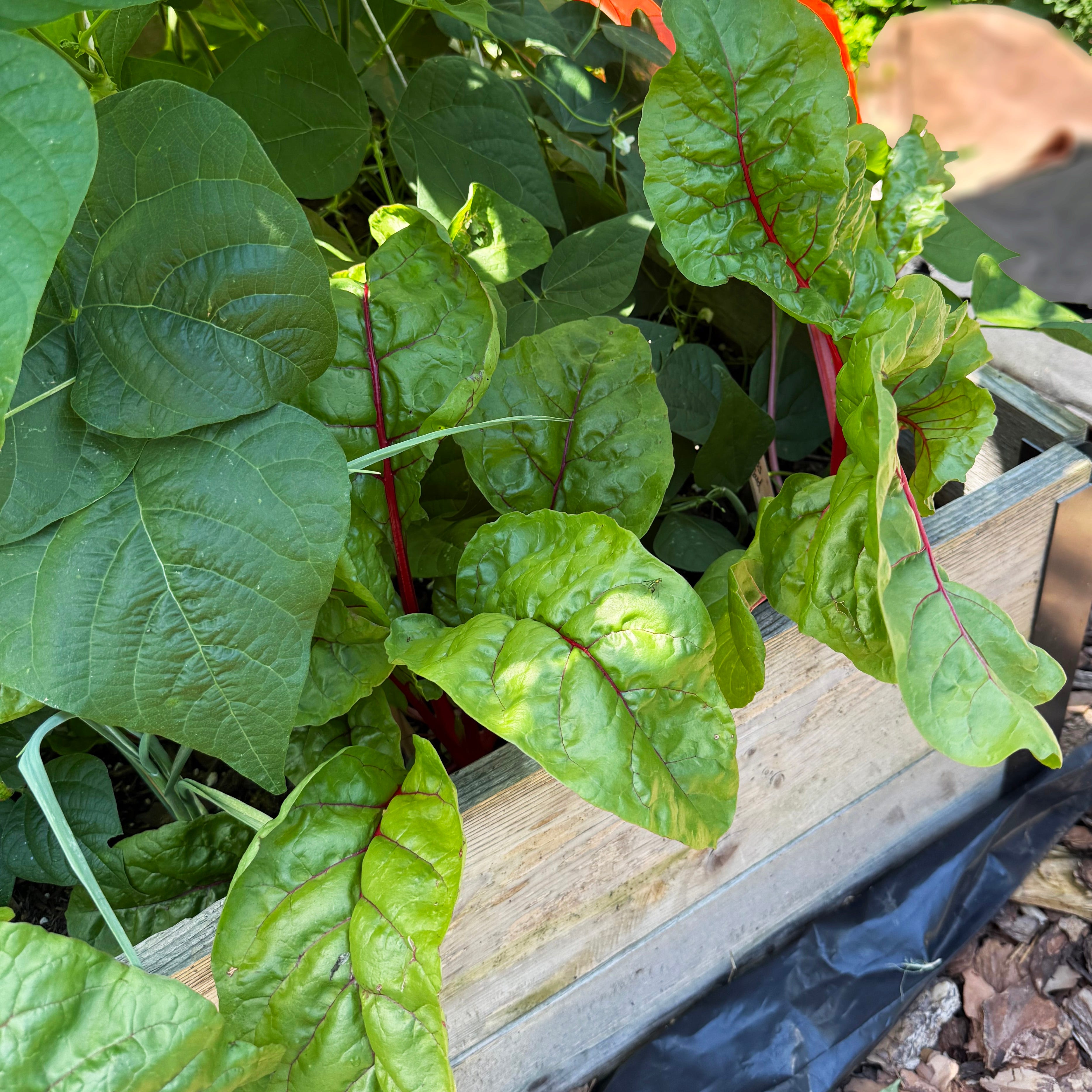
Since returning from a late Spring trip to Alaska, I’ve been happily soaking up Kentucky’s warmth and digging in the dirt again—both at home and our little plot at St. Matthew’s Episcopal Church’s community garden. Before we left, I had moved trays of vegetable and flower seedlings from the basement to the garage, beginning the slow process of preparing them for life outdoors. After our return, I continued hardening them off on the patio, and by mid-May the plants were ready for the garden.
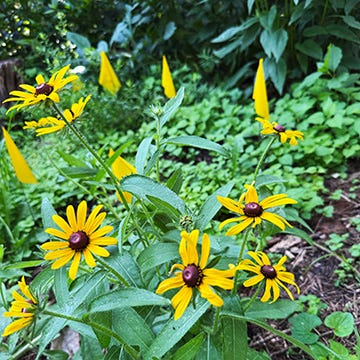
I returned to the garden plot with some trepidation. As I mentioned in my last post, this was always going to be a season of experimentation—especially because I decided to grow most of this year’s vegetable plants from seed. Many are heirloom varieties I discovered through an online gardening seminar, which makes the whole project feel both promising and uncertain. There have already been a few disappointments, especially among the flowers: the alyssums were tiny, the coreopsis frail, and transplanting them was a challenge. But the cornflowers and Black-eyed Susans grew as expected, and the Susans, in particular, are thriving.
The heirloom vegetables have brought mixed results, too. The Rampicante zucchini I planted before our trip did not survive our absence, though the one given to a friend—planted around the same time—is growing beautifully. A photo she sent a couple of weeks ago gave me hope for the second Rampicante, which I later planted at the community garden and, so far, seems to be holding its own.
The cucumbers have followed a similar pattern. The Painted Serpent cucumber planted in the Secret Garden at home did not survive transplanting — or perhaps became a snack for some passing critter — but the Lemon Cucumber beside it did. The future for the two heirloom cucumbers planted later at the community garden looks promising. Still, because cucumbers are a favorite summer vegetable in our household, I hedged my bets and added two Persian cucumbers and a slicer to the Secret Garden’s tunnel trellis.
In short, this season still holds plenty of unknowns — and likely a few surprises. But that, too, seems to be part of the experiment.


Harvesting goodness in the garden
The good news from the community garden is that, despite the season’s uncertainties, the plot is beginning to reward the effort.
By the end of May, all the heirloom vegetables planned for the community garden had been transplanted: Paul Robeson, Pink Fang, and Mortgage Lifter tomatoes; Ruby Red, Rainbow, and Fordhook Swiss chard; King Richard leeks; Fish peppers; and Listada de Gandia eggplants. I also added Seychelles and Kentucky Wonder pole beans next to a new tower trellis and sowed Scarlet Globe radish seeds in a grow box. In addition, I planted several locally or online-purchased plants, including basil, a Blue Lake snap bush bean, a Sweet Banana pepper, a Sweet Green Bell pepper, a Straight Neck heirloom squash, and zinnias. The remaining heirloom tomato plants found homes with neighbors and my sister.
Earlier this month, we began harvesting radishes and Heshiko Japanese bunching onions, and last week I pulled up a large “volunteer” leek left to grow last season. We also harvested enough Ruby Red Swiss chard to share with a friend and stir-fry at home. That was especially welcome because the first chard seeds sown directly in the garden in March never germinated; I suspect they were planted too early, while the soil was still cold. Fortunately, the seedlings started indoors survived transplanting in May.
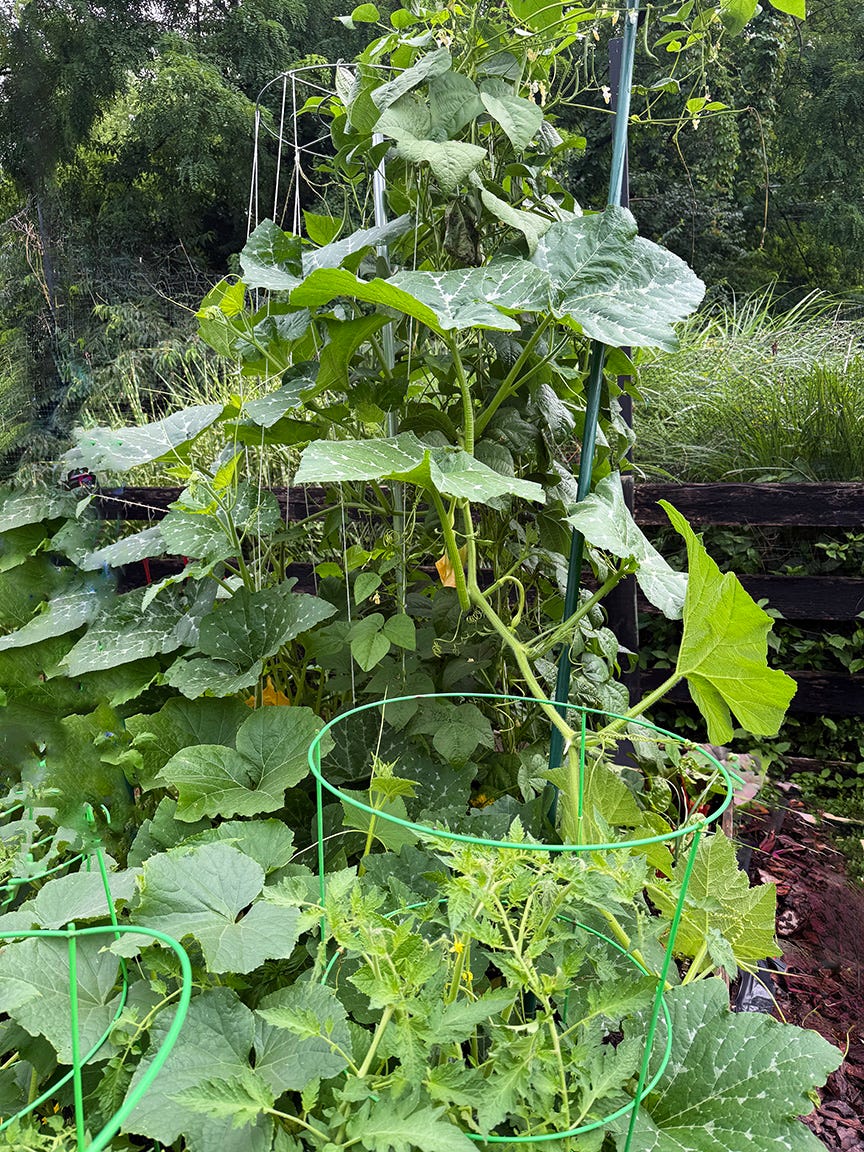
By June, flower-laden pole beans were climbing a new tower trellis. A week later, much to our surprise, the vines were heavy with beans, and a squash plant was blooming at the base. Their success was an especially delightful sight.
Two years ago, I tried growing the “Three Sisters”—beans, squash, and corn—a planting tradition practiced by Indigenous peoples for centuries because the companions support one another’s growth. This year, instead of cornstalks, the tower trellis was put up to support climbing veggies. I am happy to report that both varieties of beans are delicious, though the Kentucky Wonders won our taste test.


On the home front
At home, the Secret Garden and borders and flower beds in the front- and backyards have required their own kind of tending. After losing several major shrubs in both the back and front yards, we undertook some significant landscape work. The loss of two aging, 12-foot-plus arborvitae prompted us to install a privacy fence along back border. In the front yard, we replaced seven shrubs, including two large boxwoods killed over the winter—an expensive reminder to keep sodium and chloride-based de-icing chemicals away from shrubbery.
Despite the disruption, we continued refining our plan to weave more native plants into the landscape. Sadly, we lost our young but beloved serviceberry tree, likely to some critter or pest. That brought one more lesson from this season: protect the tender trunks of young trees before trouble finds them.

Finding God in the garden
I have been sitting on this post for two weeks. Instead of finishing it, I found myself consumed by weeding neglected borders, trying to beat the forecasted rains and the coming heat wave. By the time the weather drove me indoors, little time or energy remained for the practices that sustain my spirit—like sitting quietly in the Secret Garden to read and meditate.
This weekend, however, I finally returned to the community garden, slipping out briefly between heavy rains. I found our little plot even more lush than before. Bean, zucchini, cucumber, and squash vines were taking over the raised bed and spilling across the trellis, which had become a leaning tower of beans in our absence. Bunching onions, basil, and Swiss chard were waiting to be harvested. For that short time, I felt as if I were standing in paradise.
Filled with gratitude, I ended the weekend thankful for the sense of God’s presence I encountered in that small garden plot. The experience reminded me of Diana Butler Bass’s book Grounded: Finding God in the World: A Spiritual Revolution, and I later returned to a passage near the beginning of the book in which she reflects on finding God in the natural world:
“God is the ground, the grounding, that which grounds us. We experience this when we understand that soil is holy, water gives life, the sky opens the imagination, our roots matter, home is a divine place, and our lives are linked with our neighbors’ and with those around the globe. This world, not heaven, is the sacred stage of our times.”
Her message — and my own Edenic experience — were beautifully and unexpectedly affirmed the next day during Sunday worship at my church. For the late-afternoon service, our rector often chooses a communion liturgy beyond the familiar ones in the Book of Common Prayer. This week’s liturgy came from the Iona Community, an ecumenical community in Scotland with Celtic roots. Though it was new to me, its opening invitatory passage felt immediately familiar:
“We gather in the name of the Maker,
Who lit the world and breathed the breath of life for us.
We gather in the name of the Son,
Who saved the world and stretched out his hand to us.
We gather in the name of the Spirit,
Who encompasses the world and blesses our souls with yearning.
We gather before the Trinity of love:
God above us, God beside us, God beneath us:
The Beginning, the End, the Everlasting One.”
I’ve missed you since Foyer. Now I know where you’ve been. I rejoice in your joy amongst the bounty of God’s green earth. I look forward to your blog entries! Mom was a wonderful gardener and it helped sustain her soul. You and she are soil-sisters. Please be mindful of the extreme heat today. ✝️❤️